No. A water softener that is working well should not make your water taste salty. The salt never flows to your taps. It is only used to clean the softener inside. A small amount of sodium does replace the hard minerals, but in most homes it stays below the level people can taste. If your water suddenly tastes salty, it usually points to a fault worth checking.
Why do so many people ask this?
Of all the questions families ask me about water softeners, this is one of the most common. People see a bag of salt going into the unit. It feels natural to assume some of it ends up in the kettle.
It is a fair thought. I would probably think the same if I had not spent over two decades working with water in Irish homes.
So let me walk you through what really happens, and what the evidence tells us.
How does a water softener actually work?
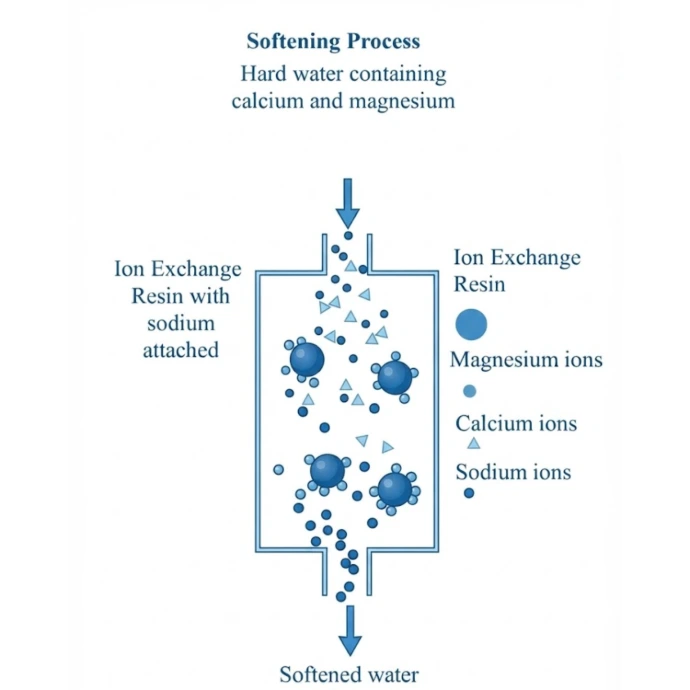
Most home softeners use a process called ion exchange. Inside the unit is a tank full of tiny resin beads.
As hard water flows through, the beads catch calcium and magnesium. These are the minerals that cause limescale. In return, the beads release a small amount of sodium.
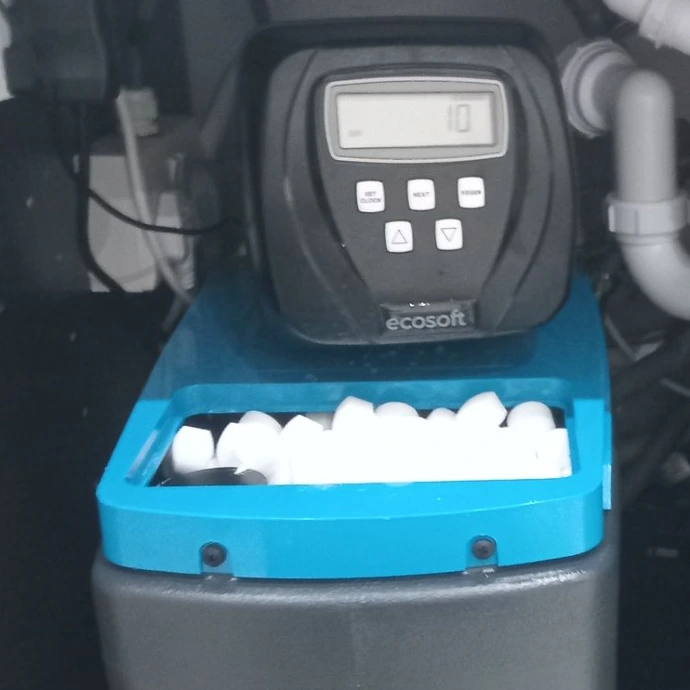
Over time, the beads fill up with hardness minerals. That is where the salt comes in. The softener mixes salt with water to make a strong brine. It washes this brine through the beads to clean them, then rinses it all away down the drain. This is called regeneration.
How much sodium ends up in softened water?
It depends on how hard your water is to begin with. The harder the water, the more minerals the softener swaps out. That means a little more sodium goes in.
As a rough guide, the swap adds just under half a milligram of sodium for every milligram of hardness removed. Hardness here is measured as calcium carbonate.
So water with a hardness of 300 mg/L would gain about 140 mg/L of sodium. That is still below the 200 mg/L taste level set out by the WHO. Only very hard water, above about 430 mg/L, would push past that figure.
This is why testing your water first matters so much. You cannot make a good decision without knowing where you start.
Why might softened water taste salty?
If your water clearly tastes salty, something is not right. In my experience, it nearly always comes back to the rinse step not finishing properly.
The most common causes include:
- A blocked or kinked drain line, so the brine cannot rinse away fully.
- A clogged brine injector, which slows down the cleaning cycle.
- A power cut or heavy water use while the softener is regenerating.
- The wrong settings, such as an incorrect hardness level.
- Too much water sitting in the salt tank.
If you notice a salty taste, run the cold tap for a few minutes. If it does not clear, contact your installer and ask them to check the system. Most of these issues are simple to fix.
Is softened water safe to drink?
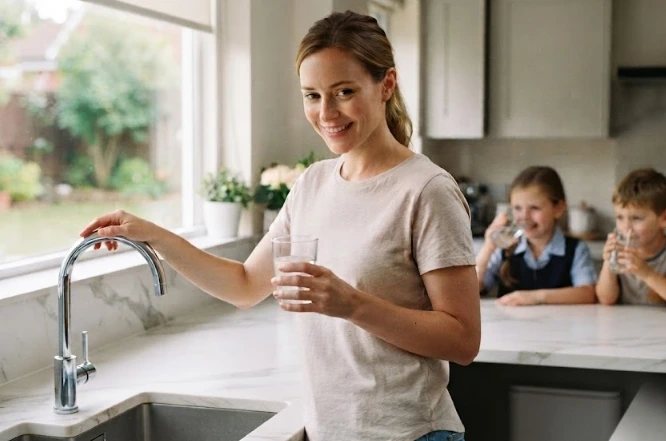
Yes, softened water is safe to drink. The added sodium is small compared with what we already get from food. The World Health Organization has not set a health based limit for sodium in drinking water. Its guidance on sodium focuses on taste instead.
For most families, it really comes down to preference. Some people can tell the difference between hard and softened water, while many cannot.
If you are making up baby feeds or following a low salt diet, your GP can advise on the best water for your family.
What should you look for in a water softener?
Choose a system that suits the size of your home and is set to your real water hardness. It should regenerate only when it needs to, which saves both salt and water.
Good installation matters just as much as the unit itself. Most taste problems come from setup and upkeep, not from softening.
Soft water without the salty taste
A water softener should make your home easier to run. It should not change the taste of your morning tea. Set up well and looked after, it never should.
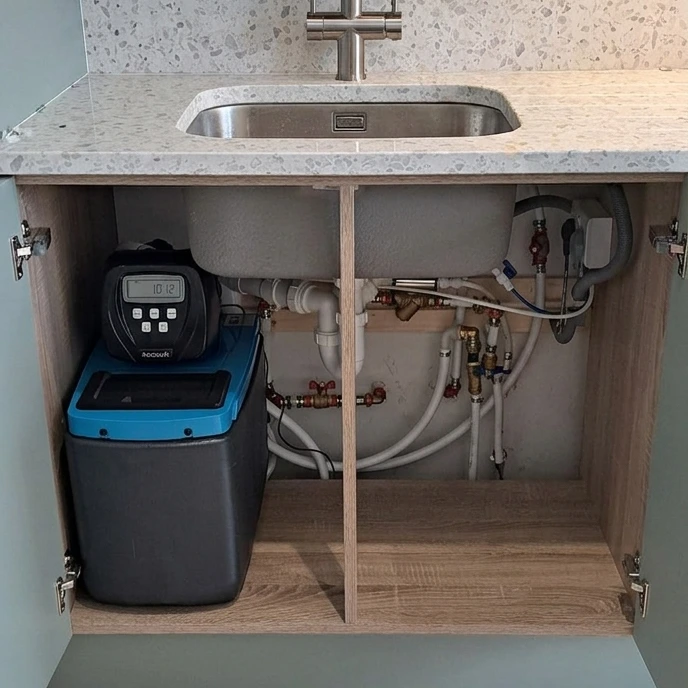
If your family is ready to leave limescale behind, take a look at the Blu Maxi Water Softener. It is designed for larger households and is built to save both salt and water. Professional installation is included, and our team will gladly talk you through where your drinking tap should sit.
Renewell Water is Ireland's Number 1 rated water filtration company, and you can read what families say about us on our reviews page.
Renewell Water offers a free consultation for you. Book it by clicking here.